The internet is growing rapidly – new devices, cloud services, IoT systems, and remote workplaces are posing ever greater challenges to networks. One of the key technological changes is the transition from IPv4 to IPv6. But how do the two protocols differ, why is IPv6 necessary, and how can modern networks be reliably monitored?
IPv4 (Internet Protocol Version 4) has been the backbone of the internet since the 1980s. It uses 32-bit addresses, which allows for approximately 4.3 billion unique IP addresses. What once seemed more than sufficient is now a scarce resource.
To bridge this scarcity, solutions like NAT (Network Address Translation) were introduced. While these work, they increase network complexity and make transparency, troubleshooting, and security more difficult.
IPv6 (Internet Protocol Version 6) was developed to solve precisely these problems. With 128-bit addresses, IPv6 provides a virtually unlimited number of IP addresses. Furthermore, IPv6 offers additional advantages:
No more address shortage
Simplified network architecture
Improved support for mobile and IoT devices
Integrated security mechanisms (e.g., IPsec)
More efficient routing
Despite these advantages, IPv4 and IPv6 often coexist in practice – so-called dual-stack networks.
The parallel operation of IPv4 and IPv6 increases the demands on monitoring, security, and performance analysis. Administrators must know at all times:
Which devices are using IPv4 or IPv6?
Are there any connection problems or latency issues?
Are resources being used optimally?
Are any security-related anomalies occurring?
This is where professional network monitoring comes into play.
Livewatch.de offers a powerful platform for monitoring modern networks, regardless of whether they are based on IPv4, IPv6, or a combination of both.
With Livewatch.de, companies can, among other things:
Monitor network connections in real time
Detect anomalies and outages early on
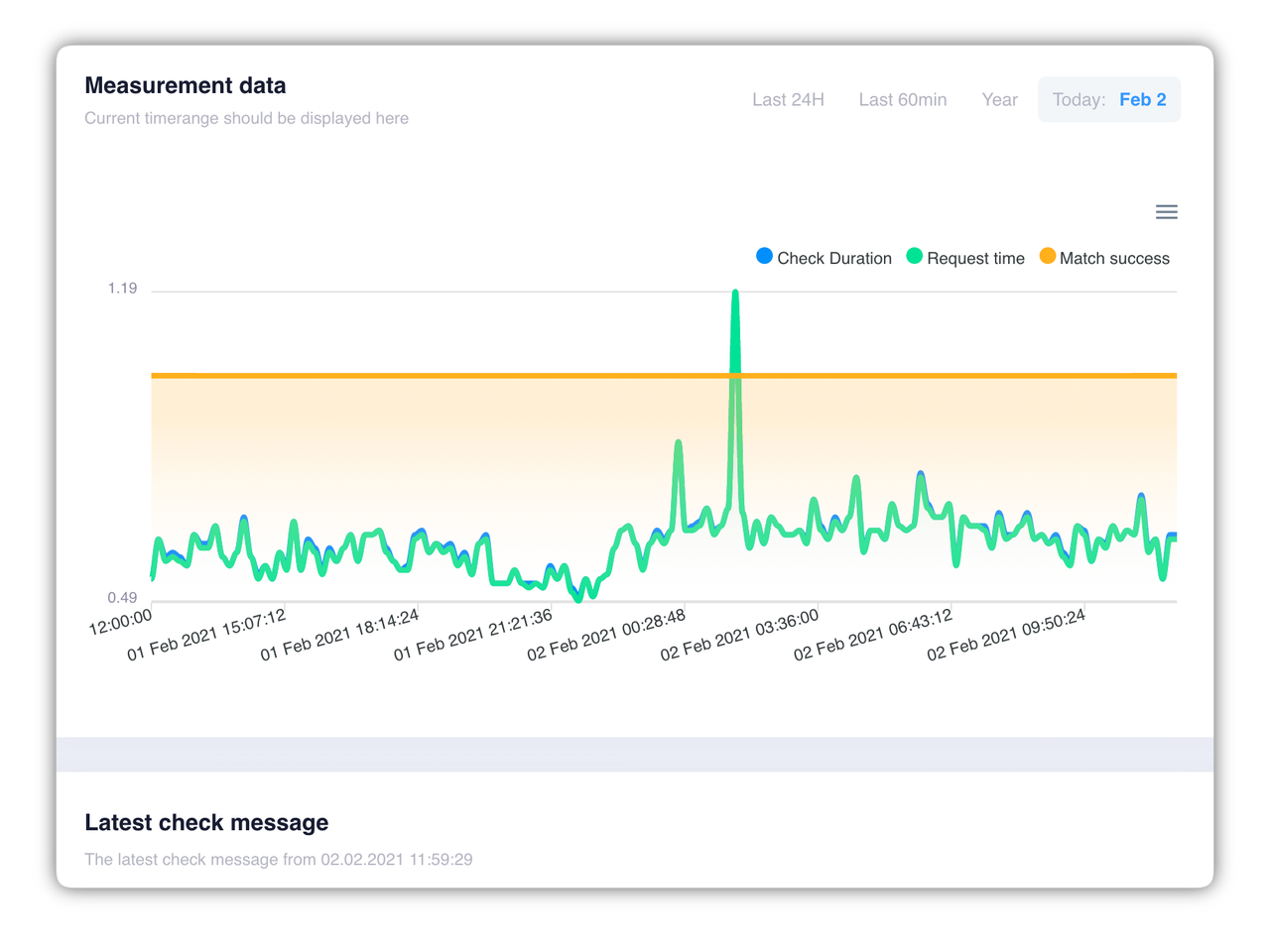
Analyze performance data clearly
Gain transparency into complex IPv4/IPv6 structures
Especially during transition phases from IPv4 to IPv6, centralized monitoring is crucial to ensure stability, security, and availability.
The switch from IPv4 to IPv6 is not a short-term trend, but a necessary development for the future of the internet. While IPv4 will not disappear completely anytime soon, the complexity of modern networks is constantly increasing.
Here we answer questions about server monitoring from Livewatch. If you have a question that we have not yet answered here, please contact us.
In recent months, several critical security vulnerabilities have been discovered in server systems that can potentially have serious consequences for IT security. Some of the most significant vulnerabilities are presented below:
1. CVE-2024-37079: Security vulnerability in VMware vCenter Server
In June 2024, a critical vulnerability was identified in VMware vCenter Server. This vulnerability allows attackers to execute arbitrary code using manipulated packages, leading to a heap buffer overflow and endangering services. VMware has already released a patch that should be installed urgently.
2. CVE-2024-49113: LDAPNightmare in Windows servers
A recently discovered vulnerability in the Windows Lightweight Directory Access Protocol (LDAP) implementation, known as CVE-2024-49113, allows attackers to cause a denial-of-service (DoS) condition by crashing the Local Security Authority Subsystem Service (LSASS). Microsoft fixed this vulnerability in December 2024.
3. CVE-2024-20697: Vulnerability in Windows 11 and Server 2022
A vulnerability in Windows 11 and Windows Server 2022 allows attackers to execute arbitrary code when extracting RAR files. Microsoft fixed this vulnerability in January 2024 and recommends installing the patch and avoiding opening RAR files from unknown sources.
4. CVE-2024-21410: Critical vulnerabilities in Microsoft Exchange servers
The Federal Office for Information Security (BSI) reported in March 2024 that at least 17,000 instances of Microsoft Exchange servers in Germany are vulnerable to critical vulnerabilities. These gaps are already being actively exploited by cyber criminals. The BSI recommends using current versions of Exchange, installing available security updates and configuring the instances securely.
5. CVE-2024-49112: Zero-day vulnerability in Windows and Windows Server
A zero-day vulnerability in Windows and Windows Server enables denial-of-service attacks because it causes the operating system to crash. Windows 10, Windows 11 and Windows Server 2016, 2019 and 2022 are affected. Microsoft fixed this vulnerability in August 2024.
In today's digital world, a stable IT infrastructure is crucial. A failure of your website or server can cost customers and damage trust in your company. Livewatch.de offers you a professional monitoring solution that monitors your systems around the clock and alerts you immediately if there are any problems.
✅ 24/7 monitoring – your servers, websites and services are continuously checked. ✅ Immediate alarm – receive notifications by email, SMS or push message as soon as a problem occurs. ✅ Detailed analyses – use extensive reports and statistics to optimize performance. ✅ Globally distributed monitoring locations – your systems are tested from multiple locations to ensure global accessibility. ✅ Easy setup – Ready to go quickly, without complicated configuration.
With Livewatch.de you can minimize downtime and ensure optimal accessibility of your IT systems. Test our service today and secure reliable monitoring!
“IPv6 support” refers to the ability of a network, device, or application to use Internet Protocol Version 6 (IPv6). IPv6 is the latest version of the Internet Protocol and was designed to address the exhaustion of available IPv4 addresses. While IPv4 only supports about 4.3 billion unique IP addresses, IPv6 offers a nearly unlimited number of addresses, which is critical to the growth of the Internet and the increasing number of connected devices.
Some key points about IPv6 support:
Address Space: IPv6 uses 128-bit addresses compared to IPv4's 32-bit addresses. This allows for a much larger number of unique addresses.
Address notation: IPv6 addresses are represented in hexadecimal numbers and may contain colon-separated blocks. For example: 2001:0db8:85a3:0000:0000:8a2e:0370:7334.
Auto-Configuration: IPv6 supports automatic configuration of network addresses for devices, making manual configuration easier.
IPv4 Compatibility: Systems that support IPv6 may also support IPv4 to allow for a smooth transition period.
Security and Routing: IPv6 also offers improvements in security and routing efficiency compared to IPv4.
As the number of available IPv4 addresses continues to decline, migrating to IPv6 becomes increasingly important to support the growing number of Internet connections. Most modern networks and operating systems support IPv6, and many Internet service providers are implementing IPv6 in their networks to ensure the future viability of their infrastructures.
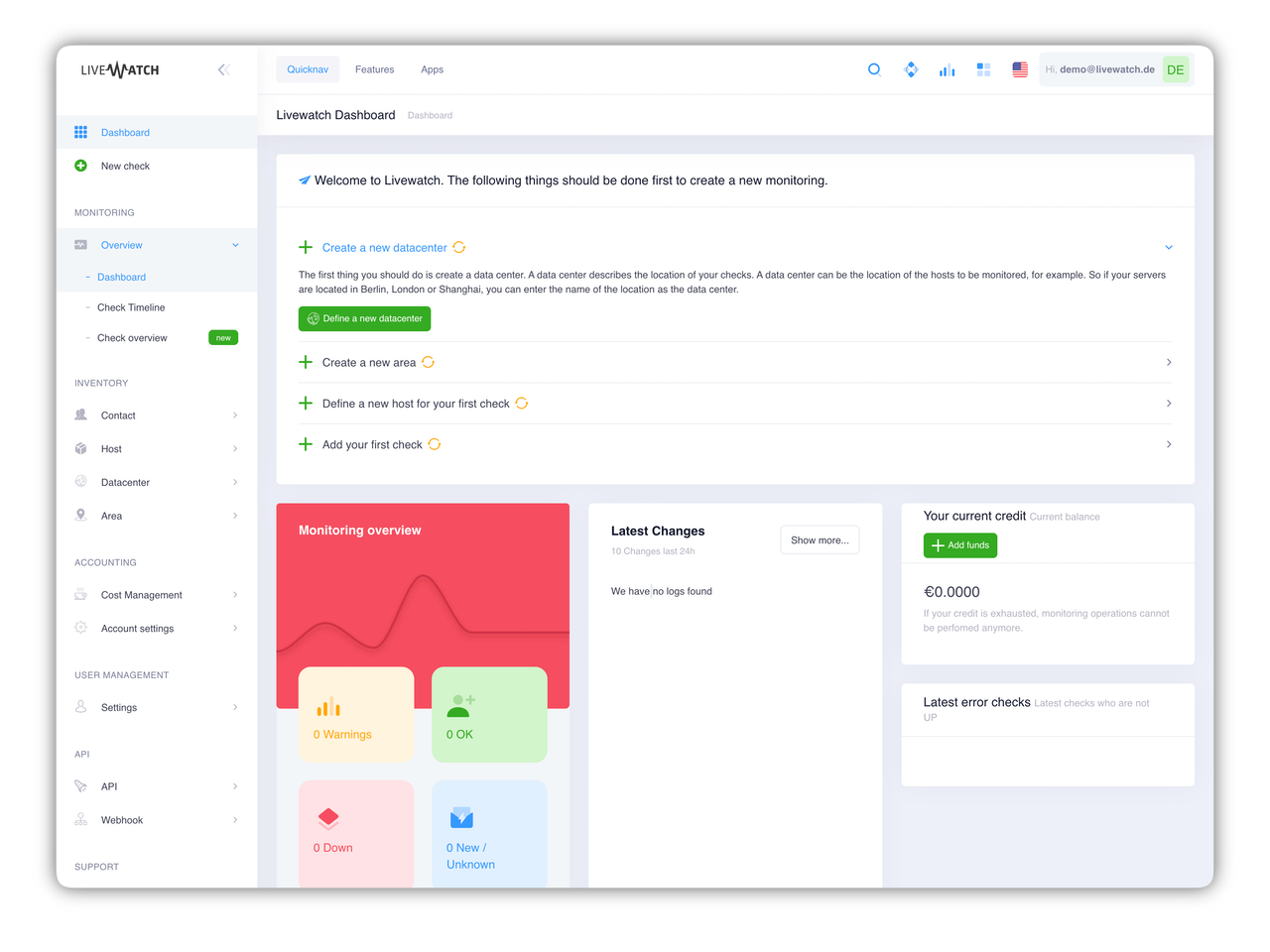
Create, manage, analyze. No problem with our Livewatch Server Monitoring Control Panel. After registration you will get immediate access and you can start the server monitoring of your website.